
icon

Akoya Pearl Buying Guide Page Banner

Quick Answer:

"Akoya pearls are prized for their mirror-like luster, round shape, and classic white tones, making them the gold standard for elegant pearl jewelry."– Ashley McNamara, Pure Pearls

Akoya Pearl Buyer's Guide: Everything You Need to Know

Akoya pearls are saltwater cultured pearls best known for their high luster, traditional white color, and refined appearance. Primarily farmed in Japan, these pearls are evaluated using factors recognized by the Gemological Institute of America, including luster, surface quality, shape, size, and nacre thickness. This guide explains how to assess Akoya pearl quality and choose the best option for your style and budget.


Akoya Pearl Quality at a Glance

Quality Factor What to Look For Buyer Impact

Luster

Sharp, mirror-like reflections

Biggest Indicator of beauty and value

Size

Ranges from 6.0-9.5mm, 7.0-8.0mm Average

Larger Sizes Increase Price Quickly

Shape

Perfectly Round to Near Round and Rarely Baroque

Perfectly Round Pearls Command Premium Pricing


Surface

Clean with Minimal Blemishes

Fewer Blemishes = Higher Grade

Nacre

Thick, Well-Layered

Improves Durability and Glow

Color

White Body Color with Rose, Silver and Cream Overtones

Rose and Silver are Most Popular


Use the Table of Contents below to skip to the parts of the article that interest you the most, or read the entire article to become an Akoya Pearl Master!


Akoya Pearls: The Basics

Akoya Pearl Basics

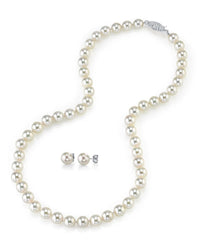
  • Cultured Akoya pearls are known for being perfectly round in shape, highly lustrous, with an almost metallic-like reflection. The luster of top grade Akoya pearls is unmatched in the pearl world.
  • Akoya pearls are usually remarkably well-matched, with little to no visible variation in overtone, luster or surface quality from pearl to pearl throughout a necklace.
  • Akoya pearls feature a white body color, with subtle overtones of rose, silver or cream.
  • Hanadama pearls are widely considered the "ferrari of pearls". A top quality Hanadama pearl necklace is about as good as it gets.
  • The typical size range of Akoya pearls ranges from 6mm - 9.5mm, with 7.5-8.0mm being the most popular pearl sizes.

Now that we’ve touched on the basics, let’s dig in deeper to understand all the various pearl attributes in more detail.

View Our Most Popular Akoya Pearl Jewelry

Sold out

Sold out

Sold out

What Makes Akoya Pearls Beautiful?

Akoya Pearls on Blue Silk by Pure Pearls

Akoya pearls are the result of a process that’s been developed over the last century between humans and Mother Nature.

The pearly substance that makes up the layers of a pearl is called “nacre”. Nacre  is a combination of microscopic aragonite platelets composed of calcium carbonate, and bound together with an organic type of “glue” called conchiolin.

Aragonite platelets  are semi-transparent white, brown or grey in color, and are able to both reflect and refract light rays striking their surfaces, giving pearls their trademark luster and subtle glow. The tighter and more compact this arrangement of crystalline layers is, the brighter the luster the pearl displays and the greater the amount of orient or iridescence.

This internal structure is what gives pearls their beauty, and makes them worthy of their designation as a precious gemstone.

For those interested in reading more about the science of Akoya pearl formation, visit:

Akoya Pearl Origins

The true origin of cultured Akoya pearls does not belong to any one inventor; there are actually four men who deserve credit for bringing these beautiful gems to the world.

Cultured Akoya blister pearls (half pearls formed on the inside of the shell) were successfully grown and harvested for the first time in 1893 by Kokichi Mikimoto – the man known today as the “Father of Cultured Pearls”.

The perfectly spherical Akoya pearl we recognize today is really the result of a technique we call surgical grafting, properly known as the Mise-Nishekawa Method.

Nucleating Pearls: Modern Pearl Grafting Techniques

While Mr. Mikimoto was not the first person to successfully culture a whole, truly round Akoya pearl, he was the first to standardize the process.

And he was a genius  at marketing his pearls.

By 1916, the first truly round cultured Japanese Akoya pearl jewelry line by Mikimoto made its appearance, sparking controversy with jewelers and industry professionals, and a flood of interest from pearl lovers that had never been able to afford fine quality pearls ... until now.

The cultured Japanese “Mikimoto” Akoya Pearl Necklace rocketed to fame in the US during the late 1940s as World War II came to an end. Young GI’s returning from their overseas engagements bought the fine white pearl necklaces in droves, and brought them home to their wives and girlfriends – cementing their place as The Classic White Pearl Necklace in American’s minds and hearts for generations to come.

One of the most famous examples of the Classic Akoya Pearl Necklace comes from Marilyn Monroe, who received her Mikimoto pearl necklace as a honeymoon gift from her husband, Joe DiMaggio.

This gift practically made Akoya pearls as American as Apple Pie!

👉 To Learn More Read:Mikimoto vs Tiffany Pearls

The Akoya Pearl Farms

Originally farmed only in Japan, the practice of culturing the saltwater Akoya pearl eventually spread to other Asian countries where the pinctada martensii oyster can also be found. The pearling area map below shows the known farming countries that culture Akoya pearls. These are:

  • Japan
  • China*
  • Vietnam
PurePearls Akoya Pearl Farm Map Japan China Vietnam

JAPANESE AKOYA PEARLS

Japan cultures Akoya pearls from the P. martensii pearl oyster – the smallest of all pearl bearing oysters. P. martensii  is also called the "white butterfly"  shell, named for the highly iridescent, creamy white to blue-ish white mother-of-pearl found on the interior of the shell.

The P. martensii  only grows to about 7 to 8cm in diameter at maturity. The oysters are all bred and raised in hatcheries in order to cultivate preferred characteristics and stronger, hardier molluscs that are able to reliably produce high quality Akoya pearls.

The colder Pacific Ocean waters surrounding Japan are ideal for culturing the Akoya pearl. The oyster’s metabolism slows and begins producing nacre in finer, more tightly compacted layers … it’s actually this very reason that Akoya pearls are normally harvested during the wintertime, typically November through February.

Ama Pearl Divers at the Japanese Akoya Pearl Farms

Japanese pearl divers, called Ama’s, are still operating today to retrieve lost or fallen oysters – especially after intense storms.

VIETNAMESE AKOYA PEARLS

Vietnam has become a player in Akoya pearl production over the last two decades; the first commercial Akoya pearl farms were launched in Vietnam in 1992.

Vietnam Akoya Pearl Farm

Vietnamese farmers cultivate Akoya pearls using the Pinctada chemnitzii  pearl oyster, which have been raised in pearl hatcheries beginning in 2001.

Generally we see rarer, uniquely-colored pearls coming out of Vietnam: natural Sky Blue, Silver-Blue, Golden and Yellow pearl colors are common.

CHINESE AKOYA PEARLS

*China  had  been making steady gains in Akoya pearl farming – both in terms of harvest volume and competitive, quality pearls for a good price in smaller sizes of 7.0-7.5mm and under.

The P. chemnitzii  oyster (also farmed in Vietnam) is also known as the Chinese Akoya Oyster or “Akoya gai”, and was the variety mainly used to cultivate Akoya pearls in China.

Chinese Akoya Pearl Farm

In 2008 and 2009 the Chinese coast was hit with a series of massive storms; the devastation to the pearl farms in the area was total, and the vast majority of small Akoya pearl farmers abandoned their farms.

As of 2017 there is no active Chinese Akoya pearl industry to speak of, and the vast majority of Akoya pearl production once again comes solely from Japan (> 95%).

👉Click Here To Learn More About Pearl Farming  


Akoya Pearl Shapes

Saltwater Akoya pearls are known the world over for being perfectly round and symmetrical in shape, with little to no variation from pearl to pearl throughout a necklace or pearl bracelet layout.

Akoya Pearl Shape: Round Pearls

Akoya pearls are classically perfectly round in shape, as seen above. In the jewelry industry, these are called “Eight Way Rollers”, as they’ll roll evenly in all directions.

Other pearl shapes exist, but are considered rather rare as the vast majority of Akoya pearl production is focused on producing valuable true round pearls.

Other shapes include free-form baroque Akoya, keshi shapes and drops.

Akoya Pearl Shapes: Baroques

Pictured here are Free Form Baroque Akoya pearls – very rare.

Akoya Pearl Colors

The most famous and traditional Akoya pearl color is white, which itself is tinged with three pearl overtones of either Rose (pronounced rosé), Silver or Cream/Ivory.

Other natural Akoya pearl colors are blue, silvery-blue and rarely, shimmering shades of gold and yellow.

Black pearls (Akoya & Freshwater) are quite common, and the product of a color-treatment process, usually dye. The pearls display a Midnight Blue-Black or Midnight Blue and Greenish-Black body color, with little to no iridescence.

Akoya Pearl Colors in Shell: White, Blue and Black Colors

The photo above features traditional White Akoya, natural color Blue Akoya and dyed Black Akoya pearls in their native pinctada shell.

Akoya Pearl Overtones

A pearl’s “overtone”  can be defined as: The secondary color that appears to shimmer over the main body color of the pearl.

Akoya Pearl Overtones

There are three traditional overtones for white Akoya pearls. These are:

  • Rose (also pronounced rosé): this is the most traditional overtone, and is a faint to deeper tinge of pink color over the white primary body color. Blondes and women with fair complexions benefit the most from this overtone choice. The pink hues will warm up against fair skin and light hair, enhancing the pearl’s sparkle.
  • Silver: easily the most popular white Akoya overtone. Silver shows as a bright white or silvery-blue sheen over the white primary body color of the pearl, with cool undertones of faint blue or green. Dark brunettes or women with Olive or Mediterranean complexions look best wearing Silver, as this overtone choice contrasts with the darker colors and makes the pearls appear larger and brighter.
  • Cream / Ivory: think of this as a tinge of French Vanilla over the warm primary white body color of the pearl. Redheads or women who blush easily (pink to red undertones of the complexion), or older women with grey or silver hair favor this overtone, as its warm hues won’t clash with their skin and hair.

Akoya Pearl Overtones on Various Skin Tones

The images below show each Akoya pearl overtone of Dark, Medium and Pale skin tones.

Akoya Pearl Overtones on Olive Skin Tone

Akoya Pearls on Olive Skin Tones

White Akoya pearls work extremely well with Olive or Mediterranean skin tones, especially Akoya pearls with a Silver overtone, which helps the pearls visually contrast against the skin and appear whiter, brighter and larger than they really are.

Akoya Pearls on Fair Skin Tones

Fair skin complections with yellow or pink undertones work beautifully with the classic Akoya rose overtone or light cream hues. Silver works too, depending depth of skin undertone - if your undertone is very pink or reddish, the blueish/greenish contrast might be too harsh. We recommend sticking with a light rose or cream overtone - the classics.

Akoya Pearl Overtones on Fair Skin Tone
Akoya Pearl Overtones on Dark Skin Tone

Akoya Pearls on Dark Skin Tones

Dark skin tones are very well-suited to the crisp, sparkling overtones of silver and rose Akoya pearls which create a bright, striking contrast ... deep creamy hues also contrast really beautifully as well (think African American models wearing Golden South Sea pearls - the color contrasts are quite striking).


Shop Our Most Loved Akoya Pearl Jewelry

Sold out

Sold out

Sold out

Akoya Pearl Sizes

The Akoya pearl oyster, p. martensii, produces pearls ranging from 2.0mm tiny “baby” pearls up through 9.0-9.5mm regularly, and 9.5-10.0mm at their largest.

Popular Akoya Pearl Sizes vs Dime and Ruler

The photo above shows the most popular Akoya pearl necklace sizes, from 6.0-6.5mm to 9.0-9.5mm.

The most popular Akoya pearl necklace size range starts at 7.0-7.5mm up through 8.0-8.5mm.  This size range is considered the most popular and versatile for all occasions and builds.  

For young girls and "first pearls" necklaces, we recommend the smaller sizes of 6.0-6.5mm and 6.5-7.0mm.

Based on decades of experience, these are our most trusted recommendations when choosing the right Akoya pearl size:

  • 6.0–6.5 mm: This size range offers a youthful look; ideal for first pearl necklaces and younger wearers, or petite women who might be overwhelmed wearing larger pearls.

  • 7.0–7.5 mm: This is our most popular everyday size; classic, versatile, and universally flattering, the 7.0-7.5mm Akoya pearl size is suitable for ladies ranging from 17-80 years old.

  • 8.0–8.5 mm: Slightly larger, but definitely offers noticeable luxury; these pearls showcase added presence without feeling oversized.

  • 9.0 mm+: These are rare, premium investment size Akoya pearls: bold, dramatic, and highly collectible.


Akoya Pearl Size, Pricing and Value

Akoya pearl prices rise exponentially with size and quality (particularly luster) because larger pearls with sharp, mirror-like reflections are significantly rarer and require longer cultivation times under more demanding farming conditions. As pearl size increases, fewer oysters produce pearls that meet top luster and surface standards, which drives prices up quickly at the higher end of the quality scale.

The pricing structure for Akoya pearls works a lot like the diamond industry in that pricing is exponentially based. This gets particularly noticeable once you hit the 7.5-8.0mm mark. Beyond this size threshold, prices nearly double with each additional millimeter increase.

This sharp price jump happens because larger Akoyas become increasingly rare. The Akoya oyster has biological limitations, and producing pearls over 8.0mm requires extended cultivation periods, increasing risk for the farmer. Only a small percentage of oysters can successfully create larger pearls while maintaining the exceptional luster and surface quality that defines premium Akoya.

A strand of 8.5mm Akoyas will cost nearly twice what a comparable 7.5mm strand costs, and 9.0mm pearls will again nearly double the price of 8.5mm pearls. This dramatic pricing curve reflects both the scarcity at each size increment and the compounding difficulty of achieving larger sizes without sacrificing that coveted mirror-like luster.

For this reason, Japanese Akoya pearls with exceptional luster and thick nacre offer the best long-term value, as their beauty, durability, and classic appeal justify the higher upfront cost and hold their desirability over time.


Akoya Pearl Grading

Pure Pearls employs the A–AAA grading scale for all Akoya pearls, with “A” representing commercial quality and “AAA” representing the finest quality available.Please note that Pure Pearls does not carry Akoya pearls graded lower than AA+ to ensure the highest enjoyment for our pearl loving clients.

  • AA+ quality: High luster with bright reflections and minor surface blemishes that are visible on close inspection but not distracting when worn.

  • AAA quality: Exceptional, mirror-like luster with very clean surfaces and minimal to no visible blemishes, even under close examination.


While Pure Pearls uses the A–AAA grading scale, we apply it both to individual pearls and to the strand as a whole. Pearl grading is inherently subjective, and a single strand may include pearls that vary slightly, for example one AA+ pearl among predominantly AAA pearls. In these cases, theoverall quality, matching, and visual consistency of the entire strand determines its final grade. This balanced approach ensures we offer superior uniformity in luster, color, shape, and surface quality, resulting in a more refined and cohesive necklace.

The A-AAA Grading Scale takes into account all 7 pearl attributes when evaluating pearls. These are:

  • Luster
  • Color
  • Origin
  • Matching
  • Pearl Size
  • Surface Quality (blemishing)
  • Symmetry of Shape

A-AAA Akoya Freshwater Pearl Grading Scale Overview

Pure Pearls only stocks Akoya pearls in the AA+ Quality, AAA Quality and Hanadama Collection grades, so you can always be 100% sure that you’ll get fine Akoya pearls from the top 10% of each yearly harvest.

Read a detailed breakdown of the Akoya Pearl Grading Guide (including close-up pictures of each grade and the specific criteria for each pearl grade), visit:

Should I Choose AA+ or AAA Quality Akoya Pearls?

Choosing between AA+ and AAA Quality Akoya pearls is ultimately a balancing act between luster, visual refinement, and budget.

AAA Akoya pearls offer sharper, mirror-like reflections and cleaner surfaces, while AA+ pearls still deliver beautiful brightness with only minor, natural variations that are often unnoticeable when worn. For many buyers, AA+ Quality represents excellent value, while the AAA Quality Akoya pearl neckaces are ideal for those seeking the most refined look and long-term heirloom appeal.

Both our AA+ Quality and AAA Quality Akoya pearls will feature:

  • Very High to Excellent Luster
  • Perfectly Round and Symmetrical Shapes
  • Excellent Matching Throughout
  • Beautiful, Even Color Saturation and Overtones
  • Fine Presentation When Worn


The AA+ and AAA Quality Akoya pearl grades are quite close in appearance to the casual observer; the pearls will all appear perfectly round, highly lustrous and evenly matched.

As you can see in the comparison image above, the main difference between the AA+ Quality and the AAA Quality Akoya pearls is LUSTER  (and this of course is the same issue when comparing the AAA versus our Hanadama Akoya as well!).

Pearl luster on higher grade Akoya pearls will be sharper, brighter and have a greater visual ‘depth’ than that of lower grade Akoyas.

All Akoya pearl jewelry listings on Pure feature drop-down menus located on the right side of the page. This allows you to customize your pearls to your pearl grade of choice, AA+ or AAA Quality.

What Are Hanadama Akoya Pearls?

Hanadama Akoya pearls are the absolute cream of the crop when it comes to each year’s harvests.

These pearls are chosen immediately after harvest for their exceptional beauty, outstanding luster, and unusually thick nacre, then set aside for meticulous matching into pairs and full strands.Hanadama pearls are independently tested Japanese Akoya pearls, certified by the Pearl Science Laboratory of Tokyo, Japan, one of the most respected pearl laboratories in the world.

Certification focuses on several strict criteria, including:

  • Intense luster
  • Strong iridescence (known as the Aurora effect)
  • Thick nacre for durability
  • Exceptionally clean surface quality

Only pearls that meet or exceed these demanding standards earn the Hanadama designation, making them a true top-tier choice for collectors and those seeking heirloom-quality pearl jewelry.

Shop our Hanadama pearl necklaces and Hanadama pearl earrings here.

Hanadama Akoya Pearl Quality

Hanadama Akoya pearls feature some of the finest luster and orient seen in this pearl type.

There, the pearls are x-rayed to measure nacre depth, and evaluated for teri-value, luster and Orient (the PSL terms the famous soap-bubble effect "Aurora"), and are photographed and issued an individually numbered gemological certificate guaranteeing the pearls’ quality.

To learn more about these incredibly gorgeous pearls, including examining a copy of a real PSL Certificate and see what to expect with your Hanadama Akoya pearl jewelry purchase, visit:


View Our Hanadama Akoya Pearl Jewelry

Sold out

Sold out

Sold out

Common Akoya Pearl Treatments

Akoya pearls when initially harvested are called "hamage". These pearls feature a cool, greenish undertone to them which is universally considered to be not optimal for use in fine jewelry.

The hamage Akoya are sent to the processing factories to undergo what the Japanese term "Maeshori"  which consists of washing the pearls to remove oyster residue and dark stains.

Then the pearls are set to begin the bleaching and pinking process, which enhances the Akoya pearl's color, warmth and sparkle.

The result is a very light to moderate Rose tinge, with the brightness of the pearl's primary white body color determining whether or not the overall overtone is graded Rose, Silver or Cream. This coloration is considered perfect for most women; it is complimentary to nearly any complexion, and subtly shimmers with a light iridescence that is pleasing to the eyes.

This after-harvest procedure is so common that it's considered "SOP" for Akoya pearls and is not disclosed on gemological reports.

Akoya Pearl Jewelry 101:

Essential Classic and Modern Pearl Jewelry Designs

Akoya Pearl Jewelry Style Guide

Popular Akoya pearl jewelry designs run the gamut from vintage-inspired classics like the simple pearl choker to modern versions of the Akoya pearl earring, accented with sparkling diamonds. We make every item by hand, to order here in our Los Angeles, CA workshop.

Fine Akoya pearl jewelry should all be matched to near-perfection with little to no variation in size, shape, body color, overtone, luster and surface quality.

Pure Pearls has assembled a breathtaking collection of Akoya pearl jewelry to suit every taste and budget. Use the slide shows below to view our most popular, most beloved Akoya pearl jewelry styles.

Akoya Pearl Necklace Styles

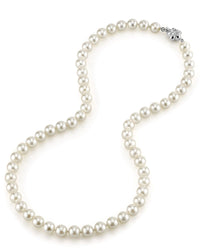
Akoya pearl necklaces come in a range of timeless and modern styles, each offering a distinct look and level of elegance. The most popular and versatile choice is the classic 18-inch princess-length Akoya pearl necklace, often considered the modern standard, as it rests just below the collarbone and transitions effortlessly from daytime wear to evening occasions. For a more dramatic and luxurious statement, the Double Strand Akoya pearl necklace stands as an Old World classic, traditionally worn at a 17–19 inch length and favored for formal events and heirloom appeal.

At the highest end of refinement, the Japanese Hanadama Akoya pearl necklace, typically in the 8.0–8.5mm size range, is prized for its exceptional luster and orient, making it a forever favorite among collectors and those seeking the finest quality pearls. Balancing tradition with contemporary style, the Tin Cup Akoya pearl necklace offers a modern, minimalist interpretation, featuring delicately spaced pearls along a fine chain and appealing to those who prefer a lighter, feminine, and effortlessly chic look.

Pearl Jewelry Styles: Akoya Pearl Necklaces

View Akoya Pearl Necklaces

Sold out

Sold out

Sold out

Pro-Tip:Most modern cultured Akoya pearl necklaces and bracelets are graduated within one-half millimeter, meaning that strands today will feature measurements of 6.0-6.5mm, 6.5-7.0mm, 7.0-7.5mm and so on. We call these “non-graduated” strands.

Keep in mind that a half-millimeter increment is VERY  small, and all pearls are assembled to feature a very subtle graduation rate, with the smallest pearls placed near the clasp and the largest showcased in the center of the layout.

Akoya Pearl Bracelets

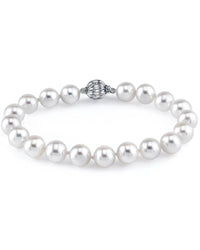
Akoya pearl bracelets offer the same balance of timeless elegance and modern versatility found in classic pearl necklaces. The most popular style is the single strand Akoya pearl bracelet, prized for its simple, chic design that drapes delicately across the wrist and complements everything from casual outfits to formal wear.

For a more refined, vintage-inspired look, the Double Strand Akoya pearl bracelet delivers added elegance and visual impact, making it a favorite for special occasions and dressier settings. On the contemporary end of the spectrum, the Akoya Tin Cup pearl bracelet brings a light, feminine, and modern feel, featuring pearls spaced along a fine chain for a minimalist look that’s effortless, stylish, and easy to wear every day.


Akoya Pearl Jewelry Styles: Pearl Bracelets

View Akoya Pearl Bracelet Styles

Sold out

Sold out

Sold out

Pro-Tip: Necklaces and bracelets are individually double-knotted between each pearl using fine matching silk thread, and finish all of our strands with matching 14K Gold clasps and French wire-wrapping to ensure the ends withstand daily handling.

To learn more about which pearl length is right for you visit: Pure Pearl’s Ultimate Guide to Choosing the Perfect Pearl Necklace

This helpful guide features photos of every classic pearl necklace length you can imagine, and a primer on how to properly measure pearl necklaces and bracelets.

Akoya Pearl Earrings

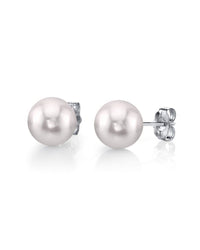
Akoya pearl earrings range from timeless essentials to elegant statement styles, making them a staple in every fine jewelry collection. The most popular and enduring choice is the classic white Akoya pearl stud earring, typically in the 7.0–7.5mm size, celebrated for its refined look that suits all ages and occasions, from everyday wear to formal events.

For a touch of modern luxury,Akoya pearl stud earrings with diamond accents add subtle sparkle through sparkling diamond details, offering just enough brilliance for daily wear without overpowering the pearl’s natural beauty. Those seeking graceful movement often favor classic Akoya pearl dangle earrings, a modern yet understated design that delivers elegance without excess embellishment.


Pearl Jewelry Styles: Akoya Pearl Earrings

Shop Akoya Pearl Earring Designs

Sold out

Sold out

Sold out

Akoya Pearl Pendants

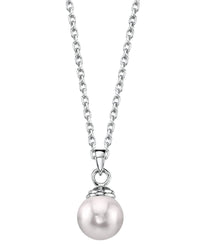
Akoya pearl pendants offer an elegant way to showcase the beauty of a single, luminous pearl, with styles ranging from timeless minimalism to refined sparkle. The most popular everyday choice is the classic Akoya pearl solitaire pendant, valued for its clean, understated design that never goes out of style, with larger pearl sizes especially favored for their balanced, flattering presence against the body.

For added brilliance,Japanese Akoya pearl and diamond pendants pair highly lustrous, AAA Quality pearls shimmering with pastel iridescence, with delicate round-brilliant diamond accents set in solid 14K gold, creating a soft, moonlit glow that feels both luxurious and wearable.


Pearl Jewelry Styles: Akoya Pearl Pendants

View Akoya Pearl Pendants

Sold out

Sold out

Sold out

To learn more about selecting the perfect pearl sizes, I highly recommend visiting: Pure Pearl's Guide to Pearl Sizes

Featured inside are tons of photos, tips and charts to help you understand how these pearls “measure up”, and which Akoya pearl size is right for you.

Akoya Pearl FAQs

Are Akoya Pearls Real Pearls?

Yes. Akoya pearls are saltwater cultured pearls formed inside Akoya oysters.

  • They form naturally through the same biological process as natural pearls, with human involvement limited to initiating the process by inserting a nucleus into the oyster, after which the oyster coats it with nacre over time.

  • Akoya pearls are prized for their sharp, mirror-like luster and classic appearance, which comes from the Akoya oyster’s ability to produce tightly layered nacre that reflects light sharply and evenly.


What Makes Akoya Pearls More Expensive Than Freshwater Pearls?

Akoya pearls are more expensive because they are grown in saltwater oysters under more limited conditions, producing just one or two pearls per harvest, with finer luster and more uniform shapes.

  • Higher luster: Akoya oysters create tightly layered nacre that reflects light sharply, giving Akoya pearls their signature mirror-like shine.

  • More consistent round shapes: Akoya pearls are known for their perfectly round shapes, rolling smoothy and evenly in all eight directions on a flat surface. This lends them the nickname "Eight Way Rollers".


Are Hanadama Pearls Worth It?

Yes. Hanadama pearls represent the highest tier of Akoya pearl quality, selected for exceptional beauty and long-term value.

  • Hanadama pearls are independently tested and certified for superior luster, thick nacre, and clean surfaces, ensuring they meet strict quality benchmarks beyond standard grading.

  • They offer the most refined Akoya appearance, with sharper light reflection, richer orient, and more consistent matching, making them ideal for heirloom-quality jewelry.


What Size Akoya Pearls Should I Choose?

The right Akoya pearl size depends on whether you want a timeless everyday look or a bold, eye-catching statement.

  • 7.0–7.5 mm for classic wear: This is the most popular and versatile size, offering a refined, elegant look that works for daily wear, professional settings, and formal occasions.

  • 8.5 mm and larger for statement jewelry: Larger Akoya pearls are rarer and more luxurious, delivering greater visual impact and presence, ideal for special occasions or those who prefer a standout look.


How Long Do Akoya Pearls Last?

With proper care, Akoya pearls can last for generations.

  • Their durability comes from quality nacre, which protects the pearl when worn regularly and stored correctly.

  • Simple care habits make a big difference, including avoiding chemicals, wiping pearls after wear, and storing them separately from other jewelry.


Do Akoya Pearls Need Special Care?

Yes. Akoya pearls are delicate gemstones and benefit from gentle, mindful care.

  • Avoid chemicals and cosmetics, as perfumes, hairsprays, and household cleaners can dull the pearl’s luster and damage the nacre.

  • Wipe after wear and store separately, using a soft cloth and a fabric-lined jewelry box or pouch to prevent scratches and preserve their natural glow.


Author

About the Author

Ashley McNamara

Ashley McNamara, of PurePearls.com, is a GIA-certified expert in Pearls, Diamonds, and Colored Stones and widely recognized as “the expert’s expert” in the pearl industry. With over 20 years of experience, she contributed to the CPAA’s Pearls As One educational course and has been cited by major news outlets nationwide. Ashley's keen eye for color and luster make her a trusted source for classic and exotic pearls alike. Explore her bestselling collections here.

Want to Learn More About Pearls? Visit Our Pearl Grading Guides:

Brand Icon

Become a Pure Member

Stay up to date on our latest products, news, discounts, and more!

Get it Quick

Free 2-Day FedEx on all orders within the USA. Overnight delivery options start at $35.

Orders Ship Fast

Most orders ship within 1-2 business days, sometimes same day.

We Ship Worldwide

International shipping is affordable and fast. Most international packages arrive in 2-4 business days.

Worry Free Delivery

Your package is fully insured. If your order is lost or stolen before delivery, we got you covered.

Pure Pearls Pricing

Traditional Retail Pricing