Your Cart ( 0 )
Free Two-Day FedEx & Free Returns
Orders ship in 24-48hrs
Free Two-Day FedEx & Free Returns
Orders ship in 24-48hrs

Mikimoto pearls are luxury Japanese Akoya pearls produced by the brand founded by Kokichi Mikimoto, widely credited with commercializing cultured pearls in the early 20th century. They are known for exceptional luster, strict quality control, and premium pricing. However, comparable Akoya pearls of equal quality can also be found through specialized pearl retailers at a lower price point. - Ashley McNamara, PurePearls.com
Say the name “Mikimoto” and you conjure up images of gorgeous, lustrous white pearls demurely wrapped around a graceful neck.
We think glamour.
We think opulence.
Indeed, today the name of Mikimoto is synonymous with luxury in the pearl industry … and for pearl lovers spanning the globe. Mikimoto pearls are considered the "gold standard" of Japanese Akoya pearl necklaces. The brand’s legacy, craftsmanship, and meticulous grading standards have made it one of the most recognized names in fine pearl jewelry worldwide.
Even with this high-profile reputation, we still field many questions about the Mikimoto Pearl Company almost daily.
Before purchasing a Mikimoto pearl necklace or pair of pearl earrings here are eight essential things every buyer should understand. Keep reading to learn the answers to our most-asked questions about the legendary Mikimoto pearls.
The term “Mikimoto pearls” is a bit of a misnomer … a Mikimoto pearl is not a pearl type, it is the brand name of a jewelry house that creates pearl jewelry using all pearl types.
That said, Mikimoto’s specializes in the sublime, lustrous Japanese Akoya pearl. The Akoya pearl comes from the Pinctada fucata martensii pearl oyster which is native to the cold waters of the Pacific Ocean surrounding Japan.
It was over a century ago that Kokichi Mikimoto created the world’s first cultured Akoya pearl. His tireless work spanned decades and built the legendary jewelry house dedicated to some of the most intricate and meticulously crafted pearl jewelry the world has ever seen.
While the Mikimoto Pearl Company is famous for their Japanese Akoya, this jewelry house also works with other high-quality pearl types to create their dazzling jewelry. Exotic Black Tahitian pearls (they call them Black South Sea) and White and Golden South Sea pearls are also prominently featured in their collections.
In fact, some of their finest work is done with these more exotic pearl types (see the Ombré necklace below).
One of my favorite exotic pearls that Mikimoto started working with is the delicately colored pink Conch pearl, found only in the Caribbean seas. Miki’s has also expanded their natural pearl collections to include the delectable orange to golden-hued Melo-Melo pearls from the South China Sea as well.
With all that said, Mikimoto’s will always be known for their Japanese Akoya pearls, and this remains a primary focus for their jewelry designs.
Mikimoto Akoya pearls can range from as low as $800 for a pair of 7.0mm Akoya pearl stud earrings in their lowest quality to as high as $500,000 or more depending on the pearls and the collections you are looking at.
For a fine quality strand of classic Japanese Akoya pearls ranging from 6.0-8.5mm, you can expect to spend minimum $5,000 up to $15,000 or so (and of course, finer qualities are available upon request).
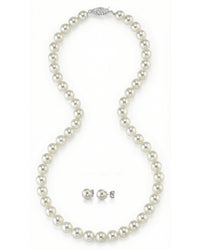
The Japanese Akoya Pearl Necklace and Earring Set from Mikimoto, 6.0-7.0mm size retails for $5,800.00 at Mikimoto America.
More exotic pearl types like Tahitian and South Sea pearls begin around $19,000 for their simple pearl necklaces and go up from there.
Just because I absolutely adore Mikimoto's High Jewelry Collections, let's take a look at another dazzling design before moving on:
This magnificent Wreath Necklace by Mikimoto features 12.0-13.0mm White South Sea pearls from Australia, surrounded by pear-shape and round-brilliant diamonds weighing 53.98cttw approximately, mounted in 18K White Gold. This exquisite creation retailed for $700,000.00, and is currently unavailable at this time.
Largely, the high expense incurred with purchasing pearl jewelry from Mikimoto is due to the caliber of the pearls (Akoya, Tahitian and South Sea), the high quality craftsmanship of the jewelry and the brand recognition - after all, Mikimoto is one of the most recognizable luxury jewelry labels in the world.
However, Mikimoto no longer cultures their own pearls, and haven’t since the early 1970’s. Instead, knowledgeable buyers purchase their top quality pearls from many of the same farmers and auctions that other pearl specialists do, albeit they do buy the cream of the crop, contributing to the premium associated with this luxury brand.
Additionally, operating costs are very high for a luxury brand like Mikimoto. As a jewelry house with stunning retail salons located in the most famous and expensive cities around the world, each location needs to be staffed, insured, be well-stocked with jewelry and myriad other costs that go into operating a luxury business. Other major expenditures include luxury advertising campaigns as well as investing heavily in their famous couture collections released each year. All of these factors contribute to the premium prices buyers will pay when choosing to shop at Mikimoto for their pearls.
Pearl jewelry shoppers who value the premium quality of Mikimoto pearls, the craftsmanship and the brand legacy of the company, will no doubt be satisfied with their pearl jewelry and their purchasing experience, even with the expensive price tag.
But from purely a value perspective, you can buy similar quality Japanese Akoya pearls with incredibly high luster, thick nacre and clean surface quality from online pearl specialist retailers like Pure at a much lower price point than you could ever dream of paying at Mikimoto’s. This is because Pure focuses solely on the pearls, not advertising campaigns and retail locations, so our overhead is minimal and our customers pay for high quality pearls, not brand names.
| Feature | Mikimoto Pearls | Other High-Quality Akoya Pearls |
| Pearl Type | Japanese Akoya | Japanese Akoya |
| Luster | Extremely High | High to Extremely High (Top-Tier) |
| Grading Control | Strict In-House Standards | Seller-Based Grading (A-AAA Scale) |
| Brand Premium | Significant | Minimal To Moderate |
| Retail Price | Luxury Tier Due To Brand Positioning and Overhead | Lower and More Affordable for Comparable Quality |
| Certification | Brand Documentation | May Include Lab or Seller Documentation |
👉Learn More: How Much To Spend On Pearls
Mikimoto has its own proprietary grading system for their pearls, and only carries pearls with excellent luster and thick, fine quality nacre.
Mikimoto's Japanese Akoya pearls are sourced from the top 5% of each yearly harvest, and then sorted into their various grades from there.
Within that top 5%, there are 4 major grades: A, A+, AA and AAA Quality, which is their highest/best pearl quality.
They also feature 4 grade variants within this system: A1, A+1, AA1 and AAA1 … the “1” denotes pearls that will have slightly more blemished surfaces.
Here’s a more detailed chart but as you can see, they removed their sub-grades A+1, AA1 and AAA1 on this older diagram:
Note on this chart that even Mikimoto’s AAA Grade will feature a very few tiny marks and growth characteristics on their pearl’s surfaces.
Unfortunately finding the exact benchmarks for the Mikimoto pearl grading scale is a murky proposition (believe me, I’ve tried), so it’s difficult for us to give you a cut-and-dried explanation of what to expect.
Thankfully, Mikimoto’s grading system does appear to translate easily to the A-AAA Pearl Grading Scale used by most reputable pearl specialists in the U.S.
👉Learn More: The Expert's Guide to Akoya Pearl Grading
After working more than 20 years in this industry, I can say yes: at their highest peak of pearl grading, Mikimoto pearls are better. Their highest grade of Akoya (AAA) feature intense luster, very clean surfaces and excellent craftsmanship. Their lower Akoya pearl grades of A and A+ are usually what is offered on their website, and are visually equivalent to our AAA and Hanadama Akoya pearls. Mikimoto's premium pearls come with some serious premium prices - sometimes as much as 10xs what you could pay elsewhere - that you should be aware of up front before you commit to shopping with Mikimoto.
Other online pearl specialist vendors offer very high quality, intensely lustrous Akoya pearls that match or exceed Mikimoto's visual standards for their A and A+ quality levels - often at heavily reduced prices.
We recommend shopping around for a vendor that specializes in pearls, has a passion for their jewels, a strong return policy and a solid reputation backed by years of experience immersed in pearls. We guarantee that there are gorgeous Akoya pearls out for significant savings that you and your family will adore and cherish for generations to come.
Mikimoto opened his first pearl boutique on the world-famous Ginza Street in Tokyo, Japan in 1901. Over time, Mikimoto’s remarkable cultured pearls gained widespread recognition and acceptance with jewelers and the public alike.
By the start of World War II he had opened jewelry stores in Shanghai, London, Paris, New York and Los Angeles.
Photo and vintage Mikimoto advertisement with permission from Rui Galopim de Carvalho FGA DGA
Today, flagship Mikimoto locations can be found in major cities all over the world, but you do not need to go to Rodeo Drive to purchase pearls from Mikimoto (although I can tell you it is quite the experience and I would recommend it to anybody).
A flagship Mikimoto retail location - this place is perfect for "putting on the Ritz"
You can find genuine Mikimoto pearl jewelry online at their site, Mikimoto America, which is the best place to go if you want the experience of purchasing directly from Mikimoto online.
Other authorized dealers offer Mikimoto pearl jewelry, but the pearls are not the AAA Grade that is reserved for their flagship locations exclusively.
Major retail jewelers carrying Mikimoto pearls include J.R. Dunn, Tara Fine Jewelry, Ben Bridge Jewelers and Nordstrom’s among others.
Vintage Mikimoto jewelry can be found (if you have the knowledge about how to hunt for these collectibles) on eBay and 1st Dibs, Ruby Lane and Etsy.
👉Learn More: Where To Buy Pearls
Both “Blue Lagoon” and “Sea Magic” pearl lines are from Mikimoto, but they are a lower quality Akoya pearl that is distributed to commercial jewelry chains such as Zales or Kay Jewelers.
These are pearls that are geared specifically to not compete with Mikimoto’s higher-end, more lustrous pearls sold at their flagship boutiques (don't get me wrong though - they are still quite lovely pearls).
Mikimoto actually has 5 different pearl lines sold under different brands within the U.S., and they are:
Pearls are often set with Sterling Silver, 10K and 14K Gold clasps and mountings, and feature the top 6-10% of each yearly Akoya pearl harvest versus Mikimoto’s top 5% sold under their official brand name.
These pearl lines offer a good opportunity to purchase a “Mikimoto brand” pearl, but at a fraction of the price with the trade-off that the pearls will have a step down in luster and slightly more surface blemishing.
👉Learn More: Mikimoto vs Tiffany Pearls
My answer: Maybe.
Let me be straight here ... the Mikimoto Pearl Company has some of the highest quality, most beautiful pearls in the world. Period. End of story.
I am a HUGE fan, and regularly feature Miki’s couture designs on my blog.
If you are looking for serious, luxury-level pearls with the legendary Mikimoto branding, then go for it. You will be incredibly happy with the money you’ve spent, guaranteed.
… On the other hand …
It’s good to keep in mind that Mikimoto no longer cultures their own pearls and does in fact purchase them from the same vendors and farms that other larger retailers do.
So if you are not in the market to drop tens of thousands of dollars to buy an Akoya pearl necklace, then it might be a good idea to shop around a bit and find out where the best place to buy pearls is for you.
👉Learn More: What Are The Best Pearls To Buy?
Purchasers of Mikimoto pearls are buyers who desire the very best, and are willing to pay to get it. They're looking for high caliber pearls, brand prestige and to partake in the legacy of Mikimoto.
Buyers looking to maximize their value and choice instead are best suited to other pearl vendors in order to gain the most beauty for their money. In addition to having a larger selection of Akoya and Hanadama pearl jewelry to choose from at a variety of price points, pearl specialists will deal in all other major pearl types such as Freshwater, Tahitian and White and Golden South Sea pearls, usually with customizable options.
Well, pardon me tooting Pure’s horn, but I think we do alright.
We are not equivalent to Miki’s famed AAA grade – you know, those “best-of-the-best-anybody-has-ever-seen” pearls (and to be perfectly frank, even Mikimoto’s only has one or two of those strands that ship from store to store upon request … these are not pearls found just anywhere) … but I think Pure Pearls offers an excellent selection of lustrous, fine quality Akoya pearls without breaking your bank account.
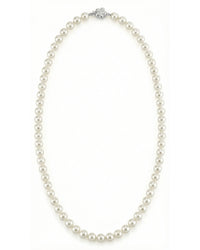
Comparatively here at Pure, Akoya Pearl Earrings start at $300, and our most popular Akoya Pearl Necklace measuring 7.0-7.5mm starts at just $1,840.00.
For those looking for the highest quality Akoya pearls online (barring the $50,000 AAA Mikimoto pearls of course) I cannot recommend our Certified Hanadama Akoya Pearl Collection enough.
👉Learn More: Pure Pearls vs Mikimoto Pearls
Hanadama Akoya pearls represent the cream of the crop when it comes to each year’s Akoya pearl harvest. Hand-selected during the harvest for their thick nacre, intensely reflective luster and shimmering iridescence, these are some of the highest quality pearls you can purchase today.
👉Learn More: The Utimate Guide To Hanadama Pearls
Tahitian Pearl Necklaces start at around $1,000, and fine, AAA Quality Tahitian Pearl Earrings start at just $590.00.
The Queen of Cultured Pearls, White and Golden South Sea Pearl Necklaces begin at about $2,500.00.
All of our pearl jewelry is created by hand, to order, here at our Southern California workshops, meaning you have an opportunity to have the pearl jewelry of your dreams tailored exactly to your tastes by a specialty boutique that lives and breathes pearls.
By operating with reduced overhead (no expensive advertising budgets, no fancy retail locations) and cutting out the middlemen by buying our pearls direct from the pearl farmers and auctions themselves, we can save our customers THOUSANDS of dollars on similar purchases from luxury brands.
Bottom line: No matter where you buy your pearls from, my #1 recommendation is to always do your research first so you feel comfortable with your purchase, and you have a solid idea of what to expect.
If you are in the market to buy Akoya pearls, whether it's to buy an Akoya pearl necklace, or buy Akoya pearl earrings, there are a number of value factors or particular attributes to look for to ensure you're buying the best Akoya pearls you can for your budget.
When shopping for Akoya pearl jewelry, our #1 recommendation is to always focus on getting pearls with the highest, sharpest and most reflective luster first, even if you have to step down in pearl size to get it. GIA (the Gemological Institute of America) states that luster is the most important attribute pearls can possess, and will make or break pearls as a precious gemstone.
Akoya pearls in particular are famous for their mirror-like or “ball bearing” luster, meaning that the best Akoya pearls should be highly reflective with excellent light return and sharp, crisp edges on reflected light sources with as little blurring or fuzzing on the edges as possible.
Smooth, clean surfaces help boost the luster of the pearls; the smoother the pearls’ surfaces are, the easier time light will have flowing over the surface and reflecting back at the viewer. You also want blemish-free surfaces as they are aesthetically pleasing, and help maintain the long-term durability of the pearls.
So: luster first, surface quality second, and then other attributes can be considered, such as size.
Traditionally, the most popular Akoya pearl sizes are going to range from 6.5mm through 8.5mm, with the 7.0-7.5mm being considered the most popular, versatile and traditional. The largest and rarest Akoya pearl size will be 9.0-9.5mm and very rarely, 9.5-10.0mm, and will fetch premium prices.
After your preferred pearl size is chosen, other variables like overtone can be selected. Rose and silver overtones are the most popular overtone choices for buyers as these tones are most complimentary to a variety of skin complexions.
Finally, Akoya pearls are known for their near-perfect matching pearl to pearl throughout their necklace or bracelet layouts as well as earrings. Look for Akoya pearl strands that have little to no variation in body color, overtone, luster levels, surface quality levels, size and shape.
Luster – The sharper and more mirror-like the reflection, the higher the quality of the pearls
Surface Quality – Fewer visible blemishes increase luster, and increase durability and beauty
Shape – Perfectly round pearls command the highest prices, rare baroque Akoya pearls are less expensive but still very unique
Matching – Look for near-perfect matching in color, overtone, size, shape and luster (especially in strands)
Size – Larger Akoya pearls are rarer and more valuable, with the 6.5mm through 8.5mm size range being the most popular and versatile
Nacre Thickness – Thicker nacre improves durability and glow
If you want to know more about how to buy Akoya pearls, visit our Akoya Pearl Buyer's Guide, which is chock full of professional guidance, tips and real life pictures so you know exactly what to look for.
What do you think? Would you splurge on the Miki's or buy from an online pearl specialist? Leave a comment - I'd love to hear from you.
XO,
- Ashley
Yes, Mikimoto deals in cultured Japanese Akoya pearls, black Tahitian pearls from French Polynesia and White South Sea pearls from Australia.
Mikimoto does deal in some natural pearls like pink Conch pearls, or the vibrant orange-yellow Melo Melo pearls from the South China Sea, but this fairly rare and usually reserved for their couture collections. They primarily deal in farmed/cultured saltwater pearls from Japan, French Polynesia and Australia.
As a legacy pearl jewelry brand, Mikimoto has the reputation and quality craftsmanship to command premium luxury jewelry prices. Additionally, Mikimoto is a company with locations worldwide, luxury branding and advertising campaigns and thousands of staff contributing to overhead and jewelry markups.
Yes, for certain buyers. Buyers that value the brand prestige and legacy and can afford the premium luxury price points will be very satisfied with Mikimoto pearl jewelry.
Pearl jewelry shoppers that prize value over brand can be best served by choosing an online pearl jewelry specialist that offers similar quality pearls without the luxury name brand and price tag.
Mikimoto's pearl jewelry is primarily made in Japan, where the company headquarters are located.
The only certification coming with a purchase of Mikimoto pearls is their own paperwork, the laser inscribed "M" mark on the clasps as well as certificates of origin for luxury strands. Hold onto those documents to establish provenance if you need to in the future. They do not offer PSL Hanadama Certificates, or other 3rd party laboratory reports with the exception of diamond and precious gemstone jewelry.
Mikimoto Pearl Company is a highly respected jewelry house that is known around the world for their luxury Akoya pearls and meticulous jewelry craftsmanship. However, there are other pearl jewelry brands that offer similar or even more beautiful pearls.
Like most pearl jewelry, resale value varies and typically reflects brand recognition more than estate jewelry appreciation. If you do own Mikimoto pearls, be sure to retain all documents, original clasp and branded packaging to prove provenace as the brand itself does fetch premiums with estate jewelers.


Stay up to date on our latest products, news, discounts, and more!
Free 2-Day FedEx on all orders within the USA. Overnight delivery options start at $35.
Most orders ship within 1-2 business days, sometimes same day.
International shipping is affordable and fast. Most international packages arrive in 2-4 business days.
Your package is fully insured. If your order is lost or stolen before delivery, we got you covered.
Our Pricing Explained
Luxury Grade Pearls. Lower Prices.
Luxury Grade Pearls.
Lower Prices.
The true value of pearls lies in their quality. We sell true luxury grade pearls without traditional luxury store markups.
We source the worlds finest pearls and sell direct to customers like you. You can expect to save about 1/2 the cost of traditional retail.


Pure Pearls Pricing

Traditional Retail Pricing