Your Cart ( 0 )
Free Two-Day FedEx & Free Returns
Orders ship in 24-48hrs
Free Two-Day FedEx & Free Returns
Orders ship in 24-48hrs

“Freshwater pearl grading is based on luster, surface quality, shape, color, and size, with luster being the most important factor, and then shape in determining overall value.”– Ashley McNamara, Pure Pearls
Freshwater pearl grading is a skill that evaluates both the tangible physical properties of the pearls along with the more ephemeral qualities of beauty that the eye perceives, and then concludes with a valuation and actual price. The Gemological Institute of America lists these physical value factors as luster, shape, surface quality, color, matching and finally, size. Understanding all how all these factors work together for evaluators to arrive at a final grade will help you buy the perfect Freshwater pearls for your budget.
With over 20 years of dedicated experience in handling cultured pearls of all types, I’ve become intimately familiar with Freshwater pearls as a gemstone, and can honestly say they’re one of my favorites because of their budget-friendly price points, softly glowing luster and attractive pastel colors.
In this guide, I’ll break down Pure’s established quality benchmarks, the story behind how Freshwater pearls are formed and what that means for your pearls, and provide detailed, real-life photos of our Freshwater pearls - so you will know exactly what to expect when you’re ready to make your purchase of a Freshwater pearl necklace, earrings or a pretty Freshwater pearl pendant.
Read the whole article, or use the links featured in the Table of Contents to skip ahead directly to parts that concern you.
Choosing the perfect Freshwater pearl jewelry comes down to understanding how important quality factors like luster, shape and surface quality impact how the pearls look and wear over time.
While luster is the most important value factor, as it dictates how brightly the pearl shines and glows from within, and how reflective its surface is, shape is the second most important factor to consider. Freshwater pearls are known for being slightly off-round to baroque in shape, with pearls that are closest to a true round shape being most valuable within its size range.
When buying Freshwater pearls, decide how important having that nearly true round shape is, or if you enjoy the off-rounded and ovalish shapes that Freshwater pearls most commonly display, and then you can focus on surface quality and luster. This approach makes it easier to narrow down the best freshwater pearls for your budget while avoiding common mistakes like overpaying for size instead of quality.
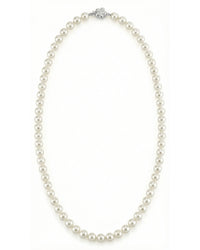
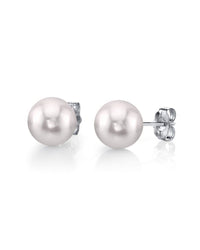
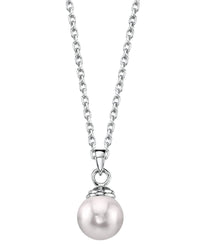
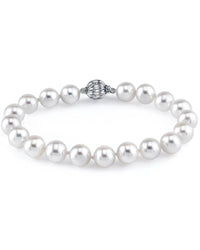
A quick checklist of the various qualities of Freshwater pearl necklaces, bracelets and matched Freshwater pearl jewelry sets shows what to expect at the various tiers:
Freshwater pearls are unique in that they are the ONLY tissue-nucleated cultured pearl in the world. Why is this an awesome, wonderful thing? Here's just a few reasons off the top of our heads:
| Quality Factor | What To Look For | Impact On Value |
| Luster | Bright, Highly Reflective Surfaces and Pearls that Seem to Glow from Within | Luster Has the Highest Impact on Value |
| Shape | Very Near-Round to Slightly Off-Round for a Classic Look; Off-Round to Ovalish in Shape is Average | Very Near-Round Pearls Have Second Highest Impact on Value and Command Premium Pricing |
| Surface Quality | Smooth Clean Surfaces with Minimal Blemishes or Growth Marks | Pearls with Clean Surfaces are Visually More Attractive and Valuable |
| Color and Overtone | Natural Shades of White, Pink, Peach and Lavender; Black Pearls are Dyed | Color is Preference Driven and Affects Desireability |
| Matching | Consistency in Luster, Shape, Color and Size in Strands and Matched Pairs | Higher Quality Pearls will Feature Better Matching, Especially in Shape |
| Size | Measured in Millimeters | If All Other Value Factors are Equal, Larger Pearls are More Valuable |
👉Learn More: The Expert's Guide to Pearl Grading
Cultured Freshwater pearls are grown in the freshwater pearl mussel, Hyriopsis cumingii (along with other hybridized mussels indigenous to the area) in freshwater lakes and man-made aquaculture ponds that also contain fish, shellfish and rice to support the small pearl farmer collectives in China.
The Freshwater pearl mussels are nucleated with 1.0mm squares of donor mantle tissue within the body of the mussel.
The tissue squares are seeded throughout the soft body of the mussel, up to 25 times on each side of the shell, creating a potential harvest of up to 50 pearls per mussel.
The sheer volume of cultured Freshwater pearls dwarfs that of any other cultured pearl type many times over each year. Freshwater pearl harvests are measured at around one thousand TONS of pearls produced annually.
This huge bounty of harvests contributes to the reason as to why Freshwater pearls are much less expensive for jewelry shoppers than other pearl types like the saltwater Japanese Akoya.
As the pearl grows inside the mussel, the tissue piece in the core of the pearl decomposes, leaving us with a pearl that is made of up 100% solid crystalline nacre - similar to how wild, natural pearls are formed.
This makes Freshwater pearls incredibly durable, and will last through generations of wear and still look beautiful and lustrous.
This solid-nacre composition also creates the softer, more "glowing" luster that Freshwater pearls display. As light rays strike the surface of the pearl and then penetrate the inner layers, the light that returns to the viewer gets broken up and diffused as it travels through the semi-transparent crystalline nacre layers. Thus, the very finest Freshwater pearls appear to subtly glow from within in certain lighting conditions.
👉Learn More: The Science of Pearl Nacre and Luster
Solid-nacre pearls have no mother of pearl bead nucleus to give the mussel a perfectly round ‘template’ to form nacre over, so the majority of Freshwater pearl harvests contain semi-baroque and baroque pearls (see the image above for an example of the variety of shapes, sizes and colors a single mussel can produce).
True round-shaped Freshwater pearls, while a major goal of pearl farmers everywhere, remain a tiny percentage of each yearly harvest – less than 3% - and are a MAJOR factor in determining a pearl’s overall quality grade.
The rarity of truly round Freshwater pearls in each harvest also directly impacts the pearl's price. Round Freshwater pearls command premium pricing due to their similarity to saltwater Akoya pearls from Japan which are known for being perfectly round, perfectly matched and with sharp, mirror-like luster, and are widely considered to be “the classic” white pearl. A Freshwater pearl necklace that gets as close as possible to this “gold standard” in terms of round shape, excellent levels of luster and clean surfaces will be priced anywhere from 1.5 - 2xs more expensive than slightly off-round to ovalish Freshwater pearls in a lower AAA or AA+ Quality grade.
In this vein, off-round or baroque Freshwater pearls can often offer excellent value for pearl buyers that don't mind the shape differences or who appreciate and want to experiment with unique shapes all at a much lower price point.
In practical terms, shape impacts Freshwater pearl grading by balancing rarity against aesthetics, making it one of the key factors that determines both quality and cost.
Finding the perfect Freshwater pearl jewelry is all about balancing beauty, intention and budget. Whether you are shopping for pearls you can wear everyday, a special occasion or are looking for something more elevated in presence, the key here is to focus on the factors that most impact how the pearls look, mainly shape and luster.
As I mentioned earlier, besides luster, shape is going to have the largest impact on price because round pearls are the rarest shape of all in the Freshwater pearl type. In the moderate size range of 7.0-9.5mm, luster and surface quality will impact the pearl’s beauty far more than size.
As with Akoya or Tahitian pearls, a slightly smaller strand with bright, sharp luster and smooth, clean surfaces will always be higher quality and more desirable than a larger strand with a chalky, dull surface or one that is visibly blemished.
We recommend beginning your search by defining your intention - whether it’s finding a pearl necklace for everyday elegance, a special holiday or milestone gift, or finding pearls that will make a statement - and then setting your budget so you can match that intention to the right pearl grade and shape.
Your best value will be found with pearls in the AA+ or AAA Quality range. The slightly off-round shapes and softer luster will give you the wiggle room to play with long, opera length strands and rope necklaces, feel confident in your "go-to" pearl stud earrings or wear a classic pearl necklace while still delivering bright shine and soft natural color.
Choose AAAA Quality Freshwater pearls with excellent luster, cleaner surfaces, and more consistent matching. Freshwater pearls will feature very near-round to round shapes, similar to the Japanese Akoya, and are the perfect choice for formal necklaces and statement earrings. Within the grade range, uniformity in luster and shape becomes more important, creating a polished and elevated look.
Focus on top-tier AAAA Freshwater pearls with exceptional luster, very clean surfaces, and rare round shapes. These pearls are carefully selected from a small percentage of each harvest. Sizes typically start around 9.0–10.0mm and up, with larger, high-quality pearls becoming increasingly rare and valuable. Here, the combination of luster, symmetry, and clean surfaces will drive long-term desirability.
| Quality Grade | Luster Level | Shape | Surface Quality | Price Range |
| AAAA Quality | Excellent; Sharp and Bright, Some Faint Diffusion Around Reflected Light Sources, Very Good Reflectivity | Very Near True Round to True Round | Excellent; 95% or More Blemish Free | $450 - $900 |
| AAA Quality | Very High; Softer but Still Bright, Some Diffusion Around Reflected Light Sources, Good Reflections | Slightly Off-Round to Near-Round | High to Very High; 90-95% Blemish Free | $250 - $600 |
| AA+ Quality | Very Good to Very High; Softer but Still Bright, Can Exceed Grade Due to Shape, Easily Visible Diffusion Around Reflected Light Sources, Medium to Good Reflections | Visibly Off-Round to Ovalish | High to Very High; 90-95% Blemish Free | $100 - $500 |
| AA Quality | Good to Very Good; Soft but Still Bright, Easily Visible Diffusion Around Reflected Light Sources, Fair to Good Reflections | Visibly Off-Round to Ovalish | Good to High; 80-90% Blemish Free | $60 - $250 |
Note: Pricing reflects typical retail ranges for 7–9mm, 18-inch Freshwater pearl necklaces. Larger sizes, round shapes, and higher luster will increase pricing. Truly round, high-luster freshwater pearls are rare and can exceed these ranges significantly.
👉Learn More: How Much To Spend on Pearls
Now that you understand the behind-the-scenes science on how Freshwater pearl formation and nacre composition directly impacts the pearl’s luster, shape and beauty, let’s dive in and explore the Freshwater A-AAAA Grading Scales. Below we’ll look at each grade and the specific benchmarks that pearls need to meet in order to qualify.
The example images I’ve used are of round, near-round and off-round Freshwater pearls, as these are the pearl qualities we deal with most often.
Baroque and drop-shaped pearls are also graded on the same A-AAAA scale as rounds and off-rounds, with symmetry of shapes, clean surfaces and luster levels being the most important factors to account for when grading these pearl shapes.
The primary difference between the AAA Quality and AAAA Quality Freshwater pearl necklace is one of SHAPE, so that's going to be the primary driver of which pearl quality you should choose.
It’s the most visible and easily quantified value attribute between the two qualities; the next two differences will be that of luster and surface quality.
Our AAAA Quality Freshwater pearlsare going to have sharper, brighter luster and less blemishing, between 1-5% of the pearls' surfaces on the strand overall will feature some type of inclusion (usually chalky spots or thin ridges where organic material has accumulated).
Most importantly, the shape will be round to the eye from a distance of 6-inches approximately, and up close inspection (less than 6-inches) will reveal nearly perfectly round pearl shapes.
Typically our AAAA Quality Freshwater pearls are used for earrings, rings and pendants because their quality is top-tier.
We bid a little more to have them set aside, fully-drilled and matched into 18-inch hanks for us, so we can create Freshwater pearl jewelry that is above and beyond what you’ll normally see in brick and mortar jewelry stores.
Their blemish rate is less than 1-3% overall, luster will be very bright, with crisp, defined edges of reflected light in the pearls’ surfaces, and you should be able to make out some detailed facial features reflected in the surfaces as well. They are the best of the best that Freshwater pearls have to offer, at half the price of an equivalent Akoya pearl.
Our AAA Quality Freshwater pearls will have luster that is nearly comparable just not quite as crisp and the blemish rate will be between 5-10%; the shape will be mostly eye-round from a distance of 1-3 feet.
Upon close inspection (less than 6 inches) with Freshwater pearl necklaces or bracelets, you’ll begin to notice a slight off-round shape to some of the pearls, however this is not the case for all the pearls in the strand.
AAA Quality Freshwater pearl earrings, pendants and rings may have 1-2 very small blemishes, but these should be mounted towards the back and not visible to any observers.
Chalky spots are easily the most common of Freshwater pearl inclusions. They’re exactly what they sound like: dull, chalky-looking areas on the pearl surface.
Pits or pitting blemishes are similar to pin-prick inclusions found on saltwater cultured pearls. They are circular indentations on the pearl’s surface.
The majority of them are small-sized and won’t be too noticeable, but are generally larger than a single pin-prick. Thankfully, these inclusions are colorless and only noticeable upon up-close inspection of 6-inches or less.
Ridges are an inclusion that is unique to Freshwater pearls, quite likely due to their solid-nacre composition.
Ridges are totally covered in nacre, so they’ll be whatever color the pearl is, i.e. white for white, pink for pink and so on.
Score marks or scoring begins with a small pin prick or pit, and then appears to be drawn off lightly over the surface of the pearl … they can look like small comets or shooting stars for those of us with a romantic viewpoint.
For dyed pearls such as our Black Freshwater pearls, up close inspection of the surfaces will often reveal a slight graininess or tiny dark speckles where the dye has concentrated. This is a natural part of the color-treatment process, and does not affect the durability or overall loveliness of the pearls.
You can think of pearl inclusions as a built-in certificate of authenticity – they’re a natural left over of the creation process. You’ll never see inclusions like this, or the subtle variations that make a pearl a true one of a kind with man-made synthetic beads.
The majority of Freshwater pearls’ inclusions will match the pearl’s natural color and/or are colorless, blending with the pearl surface making them nearly invisible to the casual observer.
Keep in mind that A-AAAA Freshwater pearl grading benchmarks count for the individual pearl, as well as the entire strand overall, so the 10% allowable blemish rate on even our lowest quality Freshwater pearl strand will still keep you squarely in a nice, high quality strand of pearls.
When choosing fine Freshwater pearls, the biggest, most important considerations to keep in mind are consistency of shape, and a fine, bright luster.
As I stated earlier in this article, Freshwater pearl grading is both a science and an art. The grader starts with analyzing tangible qualities like luster, surface quality, shape, color, and size, and then combining those elements to arrive at a judgement on that intangible aspect we know of as beauty.
A Freshwater pearl’s grade has a direct impact on its pricing tier and your budget. Shape and luster are the most important factors driving that price, followed by surface quality, size and matching in strands and pairs for pearl earrings. Because Freshwater pearls are 100% solid nacre, their glow is soft yet complex, with light reflecting and diffusing across layered crystalline structures. This interaction creates subtle overtones in white, pink, lavender, and peach hues that are totally unique to Freshwater pearls. Our Freshwater Pearl Grading Guide helps simplify these factors so you can move beyond guesswork and confidently recognize high-quality pearls at a glance.
But more than technical aspects like grading charts or surface quality percentages, Freshwater pearls represent something more meaningful. Freshwater pearls offer a wider variety of shapes and natural colors than any other pearl type, making each necklace or pair of earrings feel individual and expressive. From classic white strands with soft rose overtones to more modern baroque shapes with organic silhouettes, no two Freshwater pearls are exactly alike. When chosen thoughtfully, a Freshwater pearl necklace becomes more than just jewelry. It becomes a reflection of your personal style, something you can wear daily and treasure for years to come.
My final advice as you shop for Freshwater pearls:
Prioritize Luster Above All Else. Smaller pearls with bright, sharp luster will always look more beautiful than larger, dull pearls.
Choose the Shape and Color You Love. Perfectly round pearls are rare, but slightly off-round or baroque shapes can be just as stunning and often more unique.
Balance Size With Purpose. 7.0–9.0mm pearls are ideal for everyday wear, while 9.0–10.0mm and up offer more presence for dressier occasions.
Look for Surface Harmony, Not Perfection. Minor blemishes are natural and expected. Focus on overall appearance rather than flawlessness.
Buy With Intention.Whether you're choosing pearls for daily wear, a special event, or a higher-end piece, match your selection to how you plan to wear them.
With this advice in mind, you can choose the perfect Freshwater pearl jewelry with confidence, from necklaces and earrings to bracelets and pendants. Instead of relying only on grading labels, you’ll be able to judge pearls by their luster, balance, and overall beauty.
Explore our curated selection of Freshwater pearl jewelry or continue to our Freshwater Pearl Buyer’s Guide to learn more and find the pearls that feel unmistakably yours.
Freshwater pearl grading is the careful evaluation of a pearl's luster, surface quality, symmetry of shape, depth of color, size and matching quality. All of these elements are balanced together to arrive at an overall grade on the A-AAAA Quality Grading Scale.
Luster is the most important attribute, followed by shape, then surface quality, matching, color and finally size.
The best quality for Freshwater pearls are graded AAAA Quality. This means that the pearls will feature very bright, very sharp luster that comes close to Akoya pearls for lustrousness and reflectivity, and will be almost perfectly round in shape, with less than 5% surface blemishing on each pearl and the entire matched strand overall.
The matching for pearl strands and pairs for pearl earrings should be excellent, with little to no variation pearl to pearl throughout the layout, and for earrings matched within 0.05mm of each other.
If all of these attributes are equal, then larger pearls will be more valuable, as large, high quality pearls are rarer and will command premiums.
Not necessarily. Freshwater pearls are known for having a softer, more glowing luster versus the mirror-like, ball-bearing luster of saltwater Akoya pearls, and their shapes are usually an average of slightly off-round to ovalish, rather than the perfect round of the Akoya.
That said, the highest quality Freshwater pearls can rival the Akoya for luster and perfection of shape, but they've only fairly recently become available for the wider pearl jewelry market. I recommend looking for pearls in the AAAA Quality range, which is our highest and should provide pearls that get as close as possible to the classic Akoya, but still at a fraction of the price.
In addition, the durability of the Freshwater pearl - being composed of 100% solid crystalline nacre rather than having a mother of pearl bead nucleus like cultured saltwater pearls - is unrivaled. No other cultured pearl type is solid nacre, and this makes the Freshwater pearl incredibly durable and much more resistant to daily wear and tear.
The most important grading factor for all pearl types is luster. Luster is the phenomenon of light reflecting off the surface of the pearl, and penetrating the nacre layers, breaking up and refracting into iridescent colors on its return trip to the observer. Luster creates a highly reflective surface that can act as a type of mirror, showing you your face and light sources; the sharper and more reflective the luster is, the more valuable the pearl.
A pearl without bright, beautifully reflective luster loses its luster, it loses its most important aspect making it beautiful as a gemstone, and just becomes a chalky bead.
Shape is the second most important grading factor for Freshwater pearls because they are so rarely perfectly round. Freshwater pearls have no mother-of-pearl bead nucleus inserted to use as a template for forming round pearl shapes; instead they are nucleated with a tiny 1.0mm piece of donor mantle tissue. As the pearl forms, the chances that the pearl will be off-round, ovalish or baroque in shape are very high, and those shapes represent over 80% of any Freshwater pearl harvest.
So when a perfectly round or very near round pearl is formed, and its luster and surface quality is excellent, then that pearl will be worth exponentially more than the off-round pearls.
Look for luster that is bright and also seems to gently glow from within. You should be able to see your face reflected in the surface of the pearl, but you might not see all the details like your teeth or eyes but the pearls will still be of fine quality. Light sources reflected on the surface should show as little blurring around the edges as possible.
The pearl's surfaces should be minimally blemished, and any marks or growth characteristics should be colorless or the same color as the pearl's nacre so it's not easily noticeable. For earrings and pendants, all blemishes should be turned towards the back of the pearl or hidden by the pearl's mounting.
For any "classic" white strands or pairs of pearls, the pearl's shapes should be symmetrical at the minimum if they aren't near-round. The Freshwater pearls should be consistently matched for luster, color, shape, surface quality and size, with very little variation in any strand layout or matched pair for pearl earrings.
About the Author
Ashley McNamara, of PurePearls.com, is a GIA-certified expert in Pearls, Diamonds, and Colored Stones and widely recognized as “the expert’s expert” in the pearl industry. With over 20 years of experience, she contributed to the CPAA’s Pearls As One educational course and has been cited by major news outlets nationwide. Ashley's keen eye for color and luster make her a trusted source for classic and exotic pearls alike. Explore her best selling pearl jewelry collections here.

Stay up to date on our latest products, news, discounts, and more!
Free 2-Day FedEx on all orders within the USA. Overnight delivery options start at $35.
Most orders ship within 1-2 business days, sometimes same day.
International shipping is affordable and fast. Most international packages arrive in 2-4 business days.
Your package is fully insured. If your order is lost or stolen before delivery, we got you covered.
Our Pricing Explained
Luxury Grade Pearls. Lower Prices.
Luxury Grade Pearls.
Lower Prices.
The true value of pearls lies in their quality. We sell true luxury grade pearls without traditional luxury store markups.
We source the worlds finest pearls and sell direct to customers like you. You can expect to save about 1/2 the cost of traditional retail.


Pure Pearls Pricing

Traditional Retail Pricing