Your Cart ( 0 )
15% Off June Birthstone Sale
*Free 2-day FedEx on US orders
15% Off June Birthstone Sale
*Free 2-day FedEx on US orders

“Most buyers choose 7.5–8.0 mm pearls for everyday wear. Go larger for a statement, smaller for a delicate look. Size raises price quickly.” – Ashley McNamara, Pure Pearls
This is by far the most common question I get, and for good reason. GIA states that pearl size is one of the key factors affecting the value of pearls and also one of the first things to be noticed. While there is no definitive answer to this question, I believe this pearl size guide will help you find the perfect size of pearl for you and your budget.
Use the links below to jump to different sections of this article.
Use these links to navigate this article:
Use this chart to compare common pearl sizes at a glance.
| Size (mm) | On-Neck Look | Common Pearl Type | Typical Price Trend |
| 6.0-6.5mm | Delicate and Dainty | Akoya, Freshwater | $ |
| 6.5-7.0mm | Classic, Light | Akoya, Freshwater | $$ |
| 7.0-7.5mm | Classic Everyday | Akoya, Freshwater | $$ |
| 8.0-8.5mm | Luxe | Akoya, Freshwater, Tahitian (starts at 8.0mm) | $$ - $$$ |
| 8.5-9.0mm | Bold | Akoya (rare 8.5-9.0mm), Freshwater (upper sizes rare), Tahitian, South Sea (from 9.0mm) | $$ - $$$ |
| 9.0-10.0mm | Statement | Tahitian, South Sea, Akoya (very rare 9.0-9.5mm), Freshwater (rare), | $$ - $$$ |
| 10.0-12.0mm | Luxury | Tahitian, South Sea, Freshwater Edison (rare) | $$$ + |
| 12.0-14.0mm | Collector | South Sea, Tahitian (upper sizes), Freshwater Edison (rare) | $$$ + |
Size: 6.0-6.5mm
On-Neck Look: Delicate and Dainty
Pearl Types: Akoya, Freshwater
Price Range: $
Size: 6.5-7.0mm
On-Neck Look: Classic, Light
Pearl Types: Akoya, Freshwater
Price Range: $$
Size: 7.0-7.5mm
On-Neck Look: Classic Everyday
Pearl Types: Akoya, Freshwater
Price Range: $$
Size: 8.0-8.5mm
On-Neck Look: Luxe
Pearl Types: Akoya, Freshwater, Tahitian (starts at 8.0mm)
Price Range: $$ - $$$
Size: 8.5-9.0mm
On-Neck Look: Bold
Pearl Types: Akoya (rare 8.5-9.0mm), Freshwater (upper sizes rare), Tahitian, South Sea (from 9.0mm)
Price Range: $$ - $$$
Size: 9.0-9.5mm
On-Neck Look: Statement
Pearl Types: Tahitian, South Sea, Akoya (very rare 9.0-9.5mm), Freshwater (rare)
Price Range: $$ - $$$
Size: 10.0-12.0mm
On-Neck Look: Luxury
Pearl Types: Tahitian, South Sea, Freshwater Edison (rare)
Price Range: $$$ +
Size: 12.0-14.0mm
On-Neck Look: Collector
Pearl Types: South Sea, Tahitian (upper sizes), Freshwater Edison (rare)
Price Range: $$$ +
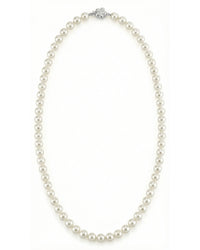
Before we go any farther, you should know that the most popular, classic and versatile pearl necklaces are in the 7.0-8.0mm size range. The 7.0-8.0mm size range is widely acknowledged to be the "go-anywhere" size, perfect for nights out, office wear or even a quick trip to the grocery store in a T-shirt and jeans.
This size range is also age-appropriate for ladies from 16 years old up through women in their 50's, so these are necklaces that will be worn and enjoyed for many, many years.
In this size range you have two options, Akoya or Freshwater pearls:
Japanese Akoya pearls are measured in half-mm increments (i.e. 7.0-7.5mm). The most popular akoya pearl size is:
👉Akoya pearl necklace 7.0-7.5mm
👉 Akoya pearl necklace 7.5-8.0mm
Freshwater pearls are usually measured in 1.0mm increments (i.e. 7.0-8.0mm) most of the time, however modern farmers have begun breaking down the sizes into 0.5mm increments today. The most popular sizes are:
👉 Freshwater pearl necklace 7.0-7.5mm.
👉 Freshwater pearl choker necklace, 7.0-8.0mm
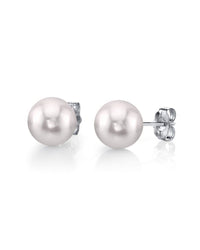
For a classic pearl stud earring, the same 7.0-8.0mm size range is also our most popular choice.
Elegant and versatile, the 7.0-8.0mm pearl stud sits squarely on the earlobe without falling forward or putting too much weight on the ear.
This size range can also accommodate second piercings a little higher up without crowding out the next earring, which is a common concern today.
The pearl size comparison photo below shows the most popular Akoya pearl necklace sizes from 6.0-6.5mm through 9.0-9.5mm. Each half-millimeter increase in size may not seem like a lot on paper, but keep in mind that pearls have volume as well as diameter.
A single half-millimeter increment increase can mean a 20% increase in overall size. Compare the first top two strands (6.0-6.5mm vs 6.5-7.0mm) to get an idea of how that 0.5mm measures up in real life. This factor also affects price, so keep that in mind when deciding what size pearls to buy. Like diamonds, pearls start to get exponentially more expensive with each millimeter increase, starting with the 7.5mm size.
Pearl sizes from top to bottom are: 6.0-6.5mm (top strand), 6.5-7.0mm, 7.0-7.5mm, 7.5-8.0mm, 8.0-8.5mm, 8.5-9.0mm and 9.0-9.5mm (bottom strand).
Quick Note: For your reference, our model below is of thin build, average height and is wearing an 18-Inch, Princess length pearl necklace in all pictures below. For most women, the 18-Inch length necklace will come to rest about 1.5 to 2-Inches below the hollow of the throat.
This necklace has a delicate and dainty pearl size; the 6.0-7.0mm size range works best for young ladies as a "first pearls" present, or women with petite builds.
This size range includes the 6.0-6.5mm and 6.5-7.0mm pearl necklaces, both in Akoya and Freshwater pearl types.
As mentioned earlier, the 7.0-8.0mm size range is basically "The Classic Pearl Necklace", you really can't go wrong here.
This size is very elegant and looks great whether you're at the office, shopping at the store, going out to dinner, special occasions, basically this size goes anywhere and everywhere.
This range includes 7.0-7.5mm and 7.5-8.0 mm pearls in Akoya and Freshwater pearl types.
The 8.0-9.0mm pearl size range is the beginning of luxury pearl territory. These pearls will have a nice "heft" to them, and look a tad larger than average for an elegant and glamorous presentation. It is most commonly worn by women 30 years old and up.
This range includes 8.0-8.5mm and 8.5-9.0 mm pearls in both Akoya and Freshwater pearl types. Tahitian pearls are available in this range as well, starting at 8.0-9.0mm.
The 9.0-9.5mm is the largest size Akoya pearls attain, and is on the higher end for large Freshwater pearls. The 9.0-10.0mm pearl size range is luxurious in both presentation and feel.
A perfectly matched necklace of 9.0-10.0mm pearls is a visually stunning strand of pearls that commands attention, yet can still be worn to both day and evening events.
This size range is where you'll find moderate and versatile Tahitian pearl necklaces, along with smaller South Sea pearls.
The 10.0-11.0mm size range consists of large Freshwater, Tahitian and South Sea Pearls. Freshwater pearls will be fairly uniform in shape and size, graduating from 10.0-11.0mm. T
Tahitian necklaces and South Sea strands will be graduated (i.e. 10.0-12.0mm, 10.0-14.0mm, etc.). These larger pearl sizes are very luxurious and very glamorous, guaranteed to make a statement.
This necklace category showcases larger pearls in natural hues of black, white, and gold. Often referred to as “luxury” pearls, they fall within the Tahitian pearl size and South Sea pearl size range, typically starting around 9.0mm and extending to 15.0mm or more, so think: Big Pearls.
These strands are usually designed to be “graduated” in size. For example, a necklace may be described as 9.0–12.0mm, meaning the pearls gradually increase in size from 9.0mm near the clasp to 12.0mm at the center.
Below are examples of our “exotic” strands that illustrate how this type of pearl graduation appears.
This White South Sea pearl necklace shown above graduates from 10.0-13.0mm approximately.
Tahitian pearl necklaces often feature a graduation rate of 2.0 to 2.5mm, sometimes larger.
The pearl stud earring is a classic piece of jewelry that every woman should have stashed in her jewelry box. The right pair of studs can go anywhere and look absolutely perfect on any occasion.
As mentioned earlier in this article, the most popular pearl stud earring size is within the 7.0-8.0mm size range. The 7.0-7.5mm and 7.5-8.0mm pearls will sit nicely on the earlobe with a demure look, and won't feel too heavy or fall forward on the lobe.
These are ideal for young ladies from 6 years old up to 16 years old, and women with petite builds.
Look for 6.0-6.5mm and 6.5-7.0mm Akoya pearl type for the best options.
The most popular and versatile pearl stud size for ladies aged 18 to 60. The 7.0-8.0mm size range is the epitome of "Classic Pearls", and is sure to be appropriate and beautiful no matter when or where they're worn.
Best choices include 7.0-7.5mm or 7.5-8.0mm Akoya pearls (don't forget the Hanadama Akoya pearls!), and the 7.0mm Freshwater pearl earrings.
Easily our second most popular pearl earring size range, the 8.0-9.0mm pearls are for ladies wanting one step up from "normal". A touch more glamorous without being too dramatic, and still comfortable on the ear.
Popular options include the 8.0-8.5mm and 8.5-9.0mm Akoya and Hanadama Akoya pearl earrings (which are our most popular!), as well as the 8.0-9.0mm Freshwater pearl studs. Tahitian pearls also emerge in this size range as well, and the 8.0-9.0mm size range is very popular.
The 9.0-9.5mm is the largest size for our Japanese Akoya pearls, and generally our smallest for South Sea pearls. This size is elegant and beautiful, and also stays within a demure range without getting overly dramatic.
Popular options include Hanadama Akoya pearl earrings 9.0-9.5mm, Tahitian pearl earrings in the 9.0-10.0mm and South Sea pearl earrings also measuring 9.0-10.0mm.
The 10.0-11.0mm pearls are right in the "sweet spot" for luxury pearl earring sizes. You'll find very large Freshwater pearls and smaller Tahitian and South Sea pearls in this size range. These pearls still have a moderate feel and weight, and won't fall forward off the ear.
Our most loved options here include White South Sea pearls measuring 10.0-11.0mm, Golden South Sea pearls 10.0-11.0mm and Tahitian pearl earrings, 10.0-11.0mm.
What women love about 11.0-12.0mm size pearls is that they are unmistakably high-end, luxury pearls. Luminous and luxurious, Angelina Jolie is known for sporting this stud size (and larger!) to many of her red carpet events.
Best choices include White South Sea pearl stud earrings, 11.0-12.0mm, Tahitian pearl stud earrings 11.0-12.0mm, and Golden South Sea pearl stud earrings, 11.0-12.0.
The 12.0-13.0mm pearl size is one of our largest available, and the largest stud size we recommend for women.
The 12.0-13.0mm size range consists of larger, exotic pearl types like the White and Golden South Sea pearls, black Tahitian pearls and in rare cases, Freshwater pearl types.
Pro Tip: Consider dangle earring styles for pearls measuring over 13.0mm due to weight issues.
These pictures all show the main pearl types: cultured Freshwater, Japanese Akoya, black Tahitian and White and Golden South Sea pearls with their most popular sizes as compared to a US Dime. Keep in mind these images are not intended to show the exact size of the pearls, but the size range available in each pearl type.
Japanese Akoya pearls range in size from 2.0mm "seed" pearls up through 9.5mm and very rarely, 10.5mm. The most popular and common sizes you'll find today range from 5.5-6.0mm, 6.0-6.5mm, 6.5-7.0mm, 7.0-7.5mm, 7.5-8.0mm, 8.0-8.5mm, 8.5 9.0mm, 9.0-9.5mm with 9.5-10.0mm and 10.0-10.5mm pearls being the most rare and expensive.
Cultured Freshwater pearls come in sizes that start as small as 4.0mm and range up to 12.0mm and lately, much larger with the advent of new culturing technologies. The most common and popular Freshwater pearl sizes found today range from 6.0-7.0mm, 7.0-7.5mm, 8.0-8.5mm, 8.5-9.0mm, 9.0-10.0mm up through 10.0-11.0mm.
Exotic black Tahitian pearls are naturally larger-sized pearls, ranging from 8.0-9.0mm, 9.0-10.0mm, 10.0-11.0mm, 11.0-12.0mm, 12.0-13.0mm, 13.0-14.0mm up to 15.0-16.0mm and sometimes even larger. The most common and popular size range is from 9.0-10.0mm up through 13.0mm.
Both White and Golden South Sea pearls are famous for being the largest pearls available in the world. They range from 8.0-9.0mm, 9.0-10.0mm, 10.0-11.0mm, 12.0-13.0mm, 13.0-14.0mm, 14.0-15.0mm up through 16.0-17.0mm on average, and can rarely attain sizes of 20.0mm. The most popular pearls range in size from 9.0-10.0mm through 13.0-14.0mm.
Cultured White and Golden South Sea pearls can attain some incredibly large sizes ... pearls measuring over 20.0mm have crossed my desk from time to time. Due to their rarity, very large South Sea pearls command premium prices starting at $1,000 for a single pearl, minimum.
This handy little printable PDF is useful for seeing seeing how large (or small) you can expect the pearls you're purchasing to be. We've included the most common and popular pearl necklace sizes from 6.0-6.5mm through 9.0-9.5mm.
Pro Tip: you can use this guide to determine how many pearls per inch to expect for each necklace (not including knots).
To view EXACTLY how each pearl size will appear in real life, download and print our PDF guide here:
7.0-7.5mm and 7.5–8.0 mm for everyday wear.
6.5–7.5 mm for a delicate, proportional look
Yes, size increases scarcity and price
7.0-7.5 mm is the Akoya classic
7–8 mm for daily wear
Tahitian commonly 8–11 mm
South Sea commonly 10–14 mm+
About the Author
Ashley McNamara, of PurePearls.com, is a GIA-certified expert in Pearls, Diamonds, and Colored Stones and widely recognized as “the expert’s expert” in the pearl industry. With over 20 years of experience, she contributed to the CPAA’s Pearls As One educational course and has been cited by major news outlets nationwide. Ashley's keen eye for color and luster make her a trusted source for classic and exotic pearls alike. Explore her bestselling collections here.

Stay up to date on our latest products, news, discounts, and more!
Free 2-Day FedEx on all orders within the USA. Overnight delivery options start at $35.
Most orders ship within 1-2 business days, sometimes same day.
International shipping is affordable and fast. Most international packages arrive in 2-4 business days.
Your package is fully insured. If your order is lost or stolen before delivery, we got you covered.
Our Pricing Explained
Luxury Grade Pearls. Lower Prices.
Luxury Grade Pearls.
Lower Prices.
The true value of pearls lies in their quality. We sell true luxury grade pearls without traditional luxury store markups.
We source the worlds finest pearls and sell direct to customers like you. You can expect to save about 1/2 the cost of traditional retail.


Pure Pearls Pricing

Traditional Retail Pricing