Your Cart ( 0 )
15% Off June Birthstone Sale
*Free 2-day FedEx on US orders
15% Off June Birthstone Sale
*Free 2-day FedEx on US orders

“There are no universal pearl grading standards. Each brand applies its own system, so grading is only meaningful within that brand’s offerings.” – Ashley McNamara, Pure Pearls
| Grade | Surface | Luster | Shape | Matching | Typical Use |
| AAAA | 98% + Clean | Exceptional | Perfectly Round | Excellent | Top-Tier Fine Jewelry |
| AAA | 90-95% + Clean | Very High | Round To Near-Round | Excellent | Fine Jewelry |
| AA+ | 85-90% + Clean | High | Mostly Round | Very Good | Mid-Range Jewelry |
| AA | 80% + Clean | Medium | Off-Round | Good | Everyday Wear |
| A | 70% + Clean | Low | Off-Round / Baroque | Fair | Fashion Jewelry and Commercial |
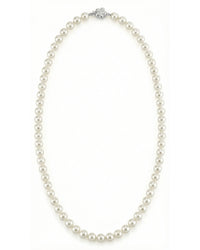
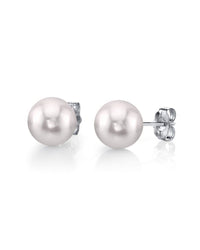
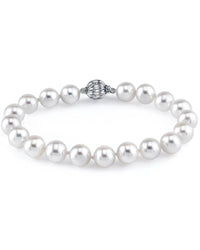
AAAA Quality Pearls
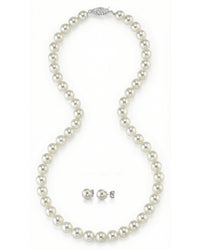
AAA Quality Pearls
AA+ Quality Pearls
AA Quality Pearls
A Quality Pearls
Wanna know a secret?
Pearl grading standards are a MESS.
Seriously – standards are all over the place, they vary from seller to seller, farmer to farmer and auction to auction. Walking an industry show and talking to pearl farmers entails learning as many as 30 new grading scales in day in order to navigate the pearls on offer.
What I take with me when I go is my special grading hank that features pearls with all my grading benchmarks so I can compare pearls to make sense of it all while I’m there.
Now, obviously you don’t have that option.
BUT, what I can do is create simple breakdown of each grade’s specific standards using the A-AAA and A-AAAA Grading Scales so you know exactly what to look for when purchasing a pearl necklace or earrings, bracelet, pendant, etc.
GIA tells us to use the 7 Pearl Value Factors in combinations to properly evaluate and assign pearl value to all pearls, whether cultured or natural. That said, GIA pearl grading is unique to GIA, and they do not use A-AAA or A-AAAA grading systems to evaluate pearls.
Follow the links below to jump straight to the specific pearl grading guide you’re looking for, or read on a bit more for an overview of the popular Grading Scales in use today, and how they relate to your pearls.
Use the links below to navigate quickly to specific questions you have, or read the whole guide.
Luster measures the rate of reflection (how crisp and detailed it is) on a pearl’s surface, and the amount of light reflected on the pearls.
Beautiful luster makes or breaks pearls as a gemstone - pearls without great luster can end up looking like chalky beads. Basically, the brighter, sharper and more reflective a pearl is, the more valuable it will be.
Read More: What Causes Luster in a Pearl
The rule regarding pearl shapes is: generally the more perfectly round in shape a pearl is, the more rare and prized it is. However many pearl connoisseurs enjoy the unique distinctiveness of baroque pearls.
Baroques are off-round, drop and asymmetrical in shape, and are graded according to symmetry.
Read More: Guide to Pearl Shapes
While many prefer the classic white pearl, pearls come in every color of the rainbow.
Naturally colored pearls like black Tahitian pearls or Golden South Sea pearls are graded on their color’s depth and saturation - the more strongly colored pearls will be more rare and valuable. Certain overtones or exotic body colors command premium pricing at auctions.
Read More: Ultimate Guide to Pearl Colors
Pearls that feature clean surfaces without inclusions like pin-pricks, scoring marks, chalky spots and wrinkles will be much more highly valued than pearls with multiple blemishes.
Because pearls are a product of nature however, there will always be some form of blemish - even if you can’t view them with the naked eye. This is why we will never call our pearls flawless.
It's just true that large pearls are rare in nature. The majority of cultured pearls harvests consist of pearls under 10.0mm and wild pearls in very large sizes are the rarest of the rare, so the bigger they are the more valuable they are (all other value factors being equal).
Read More: Ultimate Guide to Pearl Sizes
95% of all pearls on the market today are cultured pearls, meaning that humans played a role in pearl formation. Natural, wild pearls from the ocean are very rare and command a premium price, especially well-matched strands, earrings and natural pearls with coveted provenance or special story behind them.
Matchingdescribes how well pearls are matched within a pair, or an entire layout.
For Akoya pearls, matching must be near-perfect with little to no variation from pearl to pearl throughout the entire Akoya strand. Matched pairs for Akoya earrings must feature less than 0.15mm difference – the match must be as close to exact as humanly possible.
For South Sea and Tahitian matched pairs for earrings, a difference of up to 0.50mm is allowable between pearls. Tahitian and South Sea pearl necklaces will often feature graduated layouts (meaning pearls can range in size by a few millimeters), and multi-colored layouts are common.
There is no single, worldwide standard for pearl grading. Each jeweler uses their own scale, which means the grades are only meaningful within that particular store or brand.
Some use an A–AAA or A–AAAA system, while others use AAAAA or 6A scales. The important thing to remember is that the top grade -whether that’s AAA, AAAA, or even AAAAA - simply represents the highest quality pearls that specific seller offers. It does not mean you can compare those grades across different stores. For example, one brand’s “AAAAA” pearls might be the same quality as another brand’s “AAA” pearls.
This is why pearl grading can feel confusing and sometimes misleading. To shop smart, always look for a clear description of what the grades actually mean—details about luster, surface quality, shape, and size. That way, you know exactly what you’re getting and can compare more fairly between different jewelers.
💡 Pro Tip: How to Shop Smart for Pearls
Ask for a clear breakdown of what each grade means (luster, surface, shape, nacre thickness).
Compare the details, not just the letter grade.
Remember: one brand’s “AAA” might equal another’s “AAAAA.”
Focus on beauty and quality you can see, not just the grade on paper.
PurePearls.com uses both the A-AAA and A-AAAA grading scales, and what I like so much about them both are their simplicity. Grades are based upon a certain percentage of surface blemishes allowable, specific rate of luster (the sharpness of reflections) and shape.
The A-AAA scale is used most commonly with Akoya pearls. It is known overseas as the Japanese Grading System.
Our Freshwater, Tahitian and South Sea grading scales of A-AAAA are converted from the 4-tier systems that most pearl farmers use. Pure converts all A-D Tahitian and South Sea pearl grades to the A-AAAA scale to make things easier to understand and consistent across the board. The pearl quality guide charts we have listed below will help you determine which pearl makes the grade.
Cultured Akoya pearls are graded using the Japanese Pearl Grading System, using the A-AAA Scale with the addition of Hanadama Akoya pearls representing the highest pinnacle of the pearl type.
The A-AAA system evaluates pearls according to surface quality, luster, and perfection of shape (roundness and symmetry). Akoya pearls are also graded on nacre thickness, which is a visual inspection completed by the grader rather than via x-ray analysis. The only exception to this is for Hanadama pearls which are x-rayed at the Pearl Science Laboratory in Tokyo. The pearl quality chart below shows you what benchmarks to look for.
Cultured Freshwater pearls are graded using a version of the Chinese Pearl Grading System which separates pearls into Class I, Class II, Class III and Class IV grades according to surface quality, luster, matching and perfection of shape (roundness and symmetry).
In order to simplify this classification system and maintain consistency with other popular grading systems, many vendors convert this Class system to a whole letter A-AAAA Scale. Class I pearls would be the highest grade, with Class IV representing the lowest pearl grades. Much of the Chinese Grading System utilizes the Japanese A-AAA Grading System to evaluate pearls (luster and surface quality mainly), and ditches the "+" signs, relying on whole-letter grades instead.
See the chart below for a detailed breakdown of the A-AAAA system and the statistical benchmarks pearls need to meet in order to make the grade.
Pure Pearls' Pearl Quality Policy: We don’t stock any inventory for either Akoya or Freshwater pearls graded under AA+ Quality due to customer satisfaction and quality control issues.
Black Tahitian pearls are primarily gradedwith the Tahitian Pearl Farmer's A-D Grading System, which takes factors like shape, surface quality, luster and color as the primary focus. This system easily converts to the A-AAAA system widely employed in the United States.
Variations in pearl body color, overtones and color saturation levels (with as many as 80 “official” variations!) mean that the value factors for color need to be evaluated individually.
Pro-Tip: Tahitian cultured pearls MUST have a minimum nacre depth of 0.8mm per side (so 1.6mm total) in order to qualify for export. Harvests are examined and certified at random by the Perliculture Department of the Pearl Ministry for nacre thickness. Average nacre thickness for Tahitian pearls remains at 1.0mm depth or more.
White and Golden South Sea pearls also use the A-D Tahitian Pearl Grading System, and are primarily graded on their shape, surface quality, luster and depth or saturation of color - the hallmarks of their beauty and rarity.
While their colors are more limited than Tahitian pearls, subtle variations in body color and overtones (ranging from warm Golden hues to cooler Silver-White colors) play an important role in determining value. The deeper the saturation of Gold, or the purer the Silvery-White, the more prized the pearl becomes.
Pro Tip: South Sea cultured pearls traditionally have between 2.0-4.0mm nacre thickness, making them some of the most durable and long-lasting cultured pearls in the world, with a signature subtle glow that emanates from within.
*** Pure Pearls' Pearl Quality Policy ***
To maintain a high level of quality for all my customers, I only stock AAA and AAAA Quality Tahitian and South Sea pearl pendants, earrings and rings. This means that all our Tahitian and South Sea pearl jewelry will set clean with the brightest luster and prettiest overtones.
With full strand pearl grading, there will be layouts that combine many AAA Quality and AA Quality, or AAA and AAAA Quality pearls. This is done to maintain a consistent “tone” throughout the necklace in terms of matching for size, overtone or luster, and also to ensure price points remain reasonable.
These strands would be graded as AA/AAA or A/AA or AA/A and so on. Essentially, what this means is that a layout could have a AA Quality rate for surface blemishing, but fantastic AAA Quality luster (or vice-versa, with very clean pearls and medium-grade luster), and so receive a AA/AAA Quality grade.
Gem quality pearls are very rare strands or single pearls come along once in a while with unparalleled luster, nacre thickness, crystalline transparency, orient, etc., and simply must stand on their own and be priced out individually based upon what the market will bear.
The inclusions in an Emerald are known in French as “les jardins”, or “the gardens”, and each one is totally unique – a built-in identification system of sorts actually – pearls are just like an Emerald in that respect.
Pearls are what’s known as ‘organic gemstones’. They are the creations from a biological process (the others being coral, amber, jet and ivory), and as such will feature growth characteristics … kind of like Mother Nature’s fingerprints on her creations.
In this section we’re going to learn how to tell what a blemish is, and what it is not. The slightly circled Tahitians pictured above are a perfect example to work with as they feature a good variety of common inclusions, as well as typical growth features that aren’t considered inclusions at all.
A. Dents/Divots: Medium to large indentations in the nacre. These can be deep or shallow, match the body color of the pearl, or be a brownish/greyish color.
B. Score Marks: Scoring is usually light, pencil thin (or slimmer) lines in the nacre. The majority of the time, these marks are colorless and usually not noticeable.
C. Bulleting/Mottling: A light plating pattern formed on the surface of the pearl while the pearl is formed inside its host oyster. Mottling is not considered an inclusion, as it is actually indicative of thick nacre layers and does not count against the pearls A-AAA grade.
D. Knobs/Tips: These are growth characteristics, and not necessarily determined to be inclusions. These extrusions form on the end of a baroque-shaped pearl, and can be long or short, bubble-like or pointed. These knobs and tips do not usually affect the durability of the pearl as long as they are not chipped. These features can add touches of unique, artistic flair to a baroque strand of pearls.
E. Pin pricks: Very small indentations in the nacre. These can be small, individual marks, or grouped together to create a larger area of surface blemishing. Pin prick inclusions do not affect the long-term durability of the pearl, and are colorless or match the pearl’s body color.
F. Circles: Circling is also another growth characteristic of baroque pearls, with concentric rings running around the circumference of the pearls. They can be very subtle, or grouped together heavily, and impart a one-of-a-kind artistic look to the pearls.
Other pearl inclusions include: wrinkles, blinking, chalky spots, flat spots, ridges and pitting.
Pearl grading is the system jewelers use to describe a pearl’s quality and beauty.
It looks at factors like luster (shine), surface (blemishes), shape, size, and color.
Because there’s no universal standard, each seller’s grading scale (AAA, AAAA, AAAAA, etc.) is only valid within that brand.
The top grade simply means “the best pearls that store offers,” not a worldwide ranking.
Luster: The brightness and sharpness of reflections on the pearl’s surface—high luster means a sharper, mirror-like glow.
Surface Quality: Fewer blemishes or spots indicate a higher grade.
Shape: Perfectly round pearls are the rarest and most valuable, while baroque (irregular) shapes are more common.
Size: Larger pearls are rarer and generally more valuable.
Color & Overtones: Body color (white, gold, black, etc.) and subtle overtones (rose, silver, green) affect beauty and price.
Nacre Thickness: Thicker nacre creates deeper luster and greater durability.
👉 Since there’s no universal grading system, these factors are weighed differently by each jeweler, which is why it’s best to look for a seller who clearly explains what their grades mean.
AAA Pearls – Very high quality with sharp luster, nearly round shapes, and minimal surface blemishes (around 5–10% of the surface may show small imperfections).
AAAA Pearls – Top grade offered by some sellers; pearls are rounder, have even sharper, mirror-like luster, and surfaces that are almost flawless (over 95% clean).
Key Difference – Both are high quality, but AAAA pearls are considered the “best of the best” within that store’s inventory.
Yes, but not with A–AAA systems – GIA (Gemological Institute of America) does not use the AAA or AAAAA style grading scales.
Descriptive reports only – GIA issues lab reports that describe pearls by size, shape, color, luster, surface quality, nacre thickness, and matching.
No single “grade” – Instead of a letter grade, GIA provides a detailed evaluation so buyers can understand the pearl’s qualities objectively.
Why it matters – A GIA report gives credibility and assurance, but most retail pearl grading still relies on in-house scales like A–AAA.
High cost vs. value – GIA evaluations can cost more than the pearls themselves, especially for affordable strands, making it impractical for most buyers.
Luster Test – High-quality pearls show sharp, mirror-like reflections, with little to no fuzzing around the edges of reflected light sources.
Surface Check – Look closely for blemishes, spots, or bumps; the fewer you see, the higher the quality.
Shape – Perfectly round pearls are the rarest and most valuable; off-round or baroque shapes are more common. Matched tear-drop shapes (especially in rarer pearl types like South Sea) also fetch a premium.
Color & Overtones – Subtle hues (rose, silver, cream, gold) add depth and beauty; richer, more even tones are more prized. For Tahitian and Golden South Sea, the deeper and more saturated the color and overtones are the more valuable the pearl/
Matching – In strands or sets, high-quality pearls should look uniform in size, color, and luster. Exceptions are made for multi-colored pearl necklaces, but overall flow and aesthetics of the colors should be taken into account.
Tooth Test – Gently rub a pearl against your teeth; real pearls usually feel slightly gritty unless the nacre is very fine quality, while fakes feel smooth. The Tooth Test is not 100% accurate.
Yes – Different pearl types (Akoya, Freshwater, Tahitian, South Sea) are often graded on slightly different scales.
Akoya Pearls – Commonly use the A–AAA Japanese Grading System.
Freshwater Pearls – Grading can vary more widely. Typically uses the Chinese A-AAAA Grading System, but is often compared to Akoya standards.
Tahitian & South Sea Pearls – Typically use the A–D system (also called Tahitian Pearl System), where “A” is the highest grade. Easily converted to the United States A-AAA system which is more standard.
About the Author
Ashley McNamara, of PurePearls.com, is a GIA-certified expert in Pearls, Diamonds, and Colored Stones and widely recognized as “the expert’s expert” in the pearl industry. With over 20 years of experience, she contributed to the CPAA’s Pearls As One educational course and has been cited by major news outlets nationwide. Ashley's keen eye for color and luster make her a trusted source for classic and exotic pearls alike. Explore her bestselling collections here.

Stay up to date on our latest products, news, discounts, and more!
Free 2-Day FedEx on all orders within the USA. Overnight delivery options start at $35.
Most orders ship within 1-2 business days, sometimes same day.
International shipping is affordable and fast. Most international packages arrive in 2-4 business days.
Your package is fully insured. If your order is lost or stolen before delivery, we got you covered.
Our Pricing Explained
Luxury Grade Pearls. Lower Prices.
Luxury Grade Pearls.
Lower Prices.
The true value of pearls lies in their quality. We sell true luxury grade pearls without traditional luxury store markups.
We source the worlds finest pearls and sell direct to customers like you. You can expect to save about 1/2 the cost of traditional retail.


Pure Pearls Pricing

Traditional Retail Pricing